
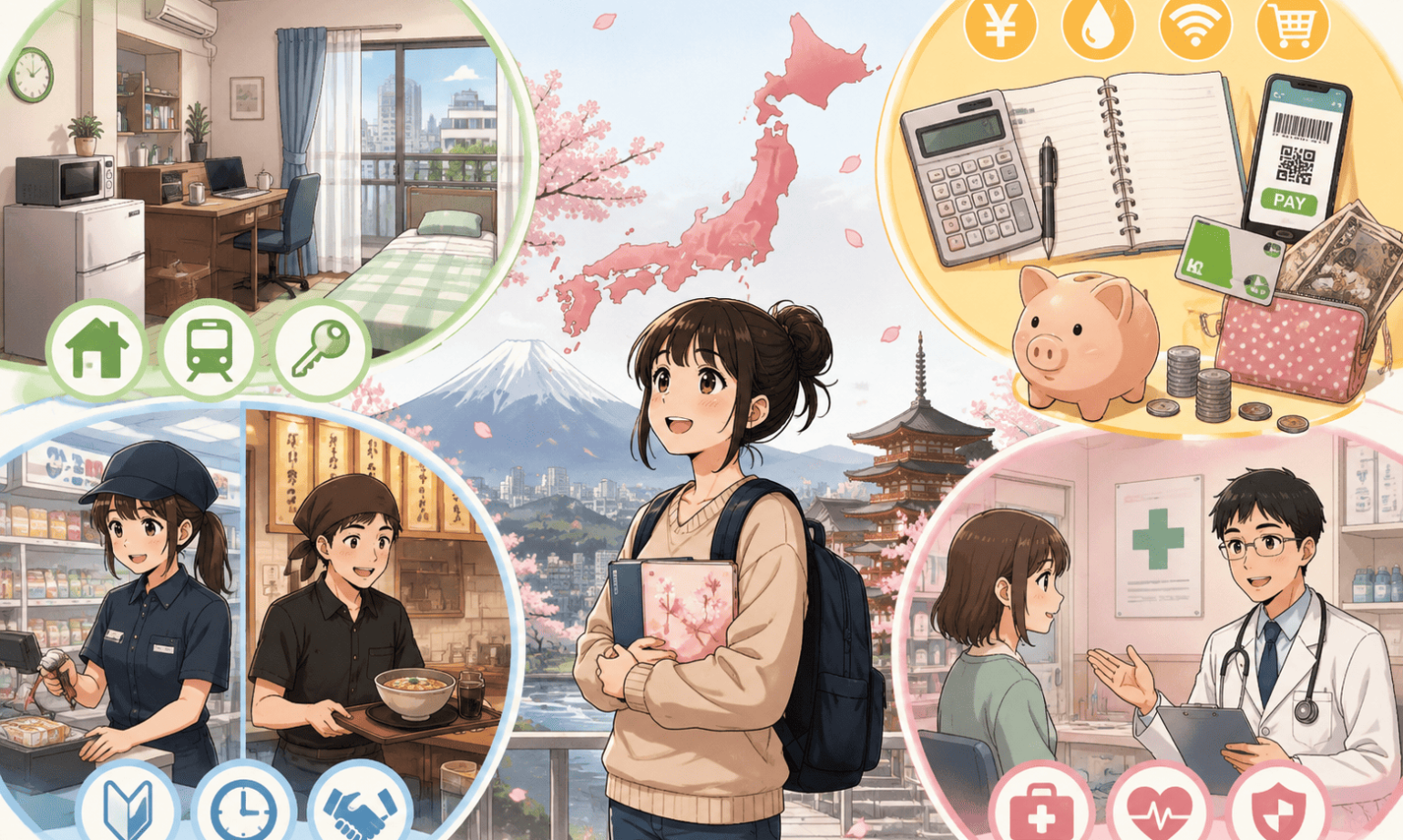
International Student Life in Japan: A Guide to Housing, Costs, Work, and Healthcare
Life as an international student in Japan is not only about classrooms and textbooks but also about adapting to a new living environment, culture, and learning how to manage finances independently. Proper preparation for expenses, mindset, and adaptation skills will help you settle down quickly and focus on your studies.
1. Accommodation – Dormitory or Private Rental?
Dormitories are the most common choice for newly arrived international students in Japan thanks to their reasonable costs and the fact that students do not need to invest heavily in household items.
- Tokyo: Approximately 180,000 yen / 3 months.
- Osaka: Approximately 150,000 yen / 3 months.
- Hokkaido: Approximately 15,000 yen / month.
If you choose to rent a private apartment, you need to prepare a relatively large initial payment, usually equivalent to 4–6 months of rent, including deposits, agency fees, and other initial costs.
In addition, homestay is also a suitable option for students who want to experience Japanese culture and improve their communication skills. The cost usually ranges from 50,000–80,000 yen/month, including meals.
2. Food and Daily Living Expenses
Food expenses for international students usually range from 30,000–50,000 yen/month, depending on spending habits. If you cook for yourself, you may only need around 20,000–30,000 yen/month for groceries.
Some money-saving tips commonly used by international students include:
- Buying food at supermarkets after 8:00 PM to receive discounts of 20–50%.
- Purchasing rice, noodles, and daily necessities in bulk from wholesale stores.
- Planning weekly expenses to avoid unnecessary spending.
Besides food and accommodation, you should also prepare a budget for other expenses such as:
- Electricity, water, and gas bills.
- National Health Insurance, approximately 20,000 yen/year.
- Transportation costs.
Compared with Tokyo, living costs in areas such as Hokkaido are often around 20–30% lower, helping many international students significantly reduce financial pressure.
3. Part-Time Work – Studying While Earning Extra Income
The Japanese government allows international students to work part-time up to 28 hours per week during school terms and up to 40 hours per week during long vacations, provided they obtain a work permit (Shikaku Gai Katsudo) before starting employment.
Common part-time jobs for international students include:
- Restaurant and café staff.
- Convenience store employees.
- Nursing care support roles.
- Other part-time jobs suitable for their Japanese language ability.
The average part-time wage usually ranges from 1,000–1,500 yen/hour, depending on the location and type of work.
Note: Students should not exceed the permitted working hours. Violating part-time work regulations may affect residence status and could result in visa cancellation or deportation from Japan.
4. Healthcare and Emergency Support
After entering Japan, international students must register for National Health Insurance within 14 days. This mandatory system helps significantly reduce medical examination and treatment costs at healthcare facilities.
If you encounter difficulties in study, work, or daily life, you can seek support from:
- International student support offices at your school.
- Free consultation centers for foreign residents.
- Local multilingual support organizations.
Prepare Well for a Successful Study Abroad Journey
Life in Japan becomes easier when you are well prepared financially, physically, and mentally before departure. With the support of [Center Name], students receive guidance throughout the process, from document preparation and lifestyle orientation to settling into their studies and daily life in Japan, making their study abroad journey smoother and more secure.