
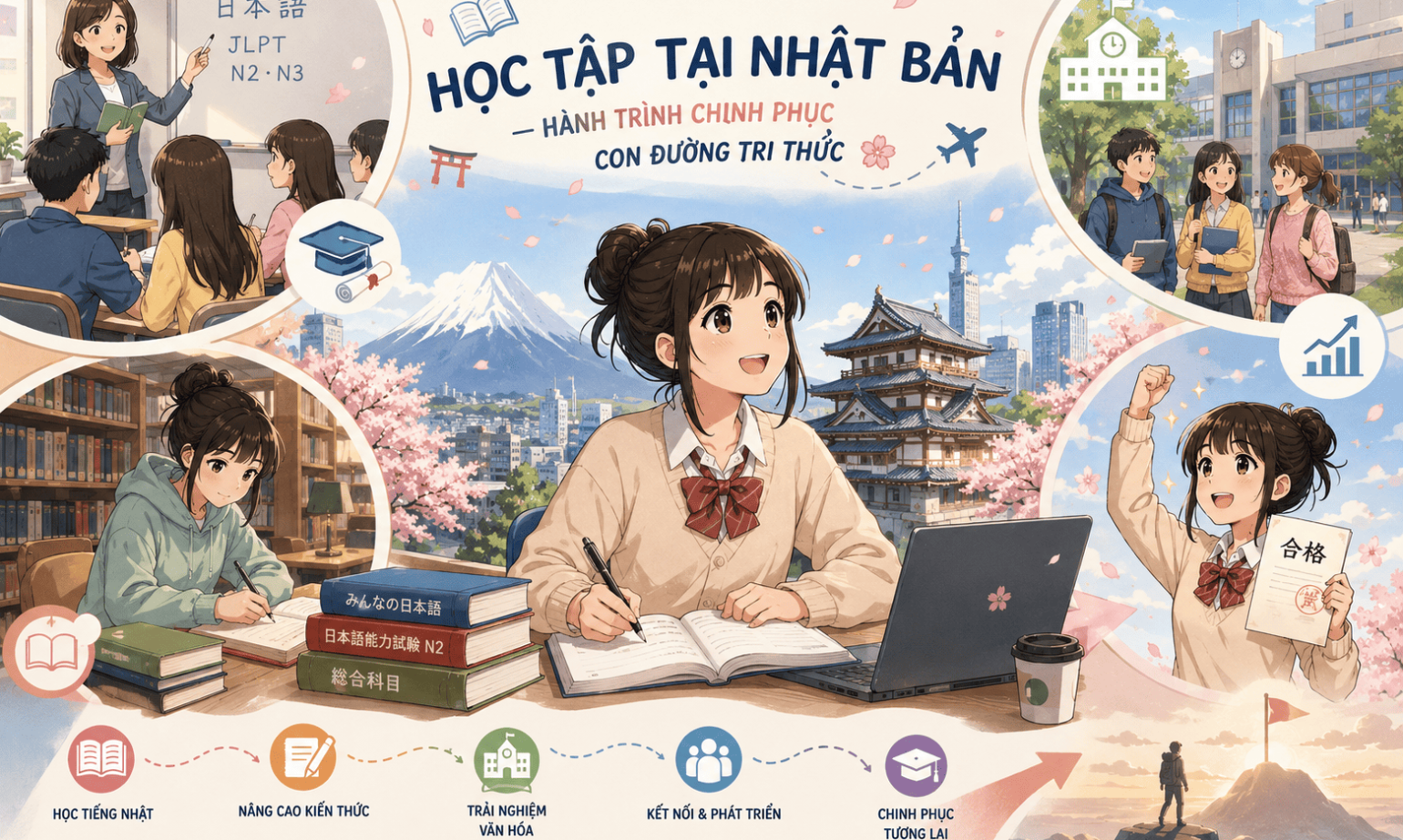
Japan’s Education System and Effective Study Strategies for International Students
Japan’s education system is highly regarded worldwide for its discipline, structured teaching methods, and the balanced combination of professional knowledge and practical skills. However, to study effectively in Japan, international students need to understand the education system and prepare a suitable learning plan from the beginning.
1. Japan’s Post-High School Education System
After completing secondary education, international students can choose different levels of study depending on their career goals and personal abilities.
- Junior colleges.
- Vocational schools (Senmon schools).
- Short-term universities.
- Universities.
- Graduate schools.
Before entering a specialized program, many international students study at a Japanese language school to achieve the Japanese proficiency level required for admission.
Currently, Japan has more than 780 universities and approximately 340 Japanese language schools nationwide, providing international students with a wide range of educational options aligned with their career goals.
2. Language Barrier – The Biggest Challenge at the Beginning
Japanese is an essential tool for studying, daily life, and finding part-time employment. Unlike many other countries, English is not widely used in everyday communication in Japan.
Even after studying Japanese for 6–9 months before departure, many international students still face challenges in the early stages because real-life communication differs from what is taught in textbooks.
To adapt more quickly, students should:
- Make the most of Japanese language training in Vietnam.
- Practice listening and speaking regularly through movies, TV programs, or podcasts.
- Actively communicate with Japanese people from the beginning to improve language skills and confidence.
3. Effective Study Methods
Developing a scientific study method helps students maintain motivation and achieve better results throughout their studies in Japan.
- Break large goals into smaller weekly or daily learning tasks.
- Join clubs and extracurricular activities to expand relationships and gain a deeper understanding of Japanese culture.
- Seek support from international student offices when facing academic difficulties or administrative procedures.
- Take advantage of internship opportunities at Japanese companies to gain practical experience before graduation.
4. From Education to Career – A Clear Path After Graduation
One of the major advantages of studying in Japan is the opportunity to participate in internships at companies during the study period. This allows students to become familiar with professional working environments and gain practical experience before graduation.
Degrees awarded by Japanese educational institutions are widely recognized internationally, creating various career opportunities in Japan, global companies, and Japanese enterprises in Vietnam.
Studying in Japan – Preparing for the Future
Studying in Japan provides not only professional knowledge but also helps students develop discipline, independence, and problem-solving skills. These valuable abilities will support their career growth throughout their lives.
With the support of [Center Name], students receive guidance on suitable study pathways, comprehensive preparation in language skills, essential abilities, and application documents, building a strong foundation to confidently study and develop in Japan.